
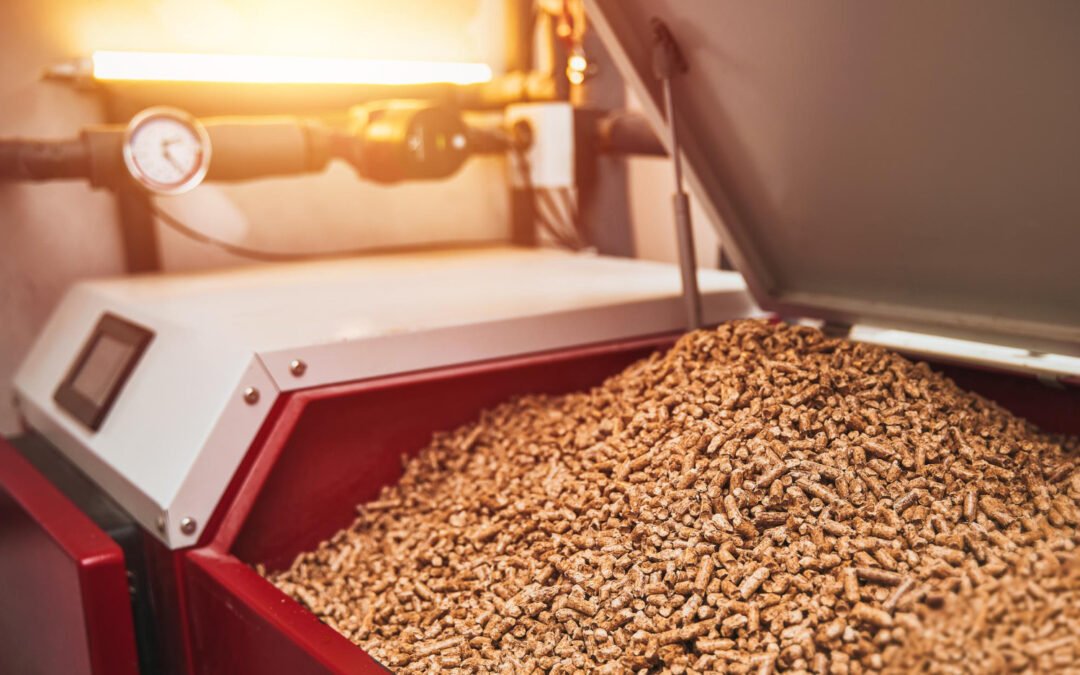
- Fuel Availability and Supply
Before committing to a biomass boiler, it’s crucial to assess the availability and reliability of your chosen fuel source. Consider the following questions:
-
- Is your preferred fuel type available locally?
- What is the cost of the fuel, and how does it compare to your current heating fuel?
- Do you have a reliable supplier who can deliver fuel regularly?
- Is there potential for fuel price fluctuations?
Living in an area with easy access to a local wood pellet or chip supplier can significantly reduce your fuel costs and ensure a consistent supply.
- Storage Space Requirements
Biomass fuels require dedicated storage space, and the amount of space needed varies depending on the type of fuel you choose. Wood pellets can be stored in a compact hopper or silo, while wood chips and logs require considerably more room.
You should ensure that your property has adequate space for fuel storage. Some homeowners convert garages, outbuildings, or purpose-built storage areas to accommodate their fuel needs. The storage area should also be dry and well-ventilated to prevent moisture from degrading the fuel quality.
- Heating Demand and Property Size
The size and heating demand of your property will play a significant role in determining which type of biomass boiler is appropriate. Smaller homes may only require a compact pellet boiler, while larger estates, commercial buildings, or industrial facilities may need a high-capacity wood chip or multi-fuel boiler.
It’s advisable to have a professional heating engineer conduct a heat load assessment of your property to determine the correct boiler size. An undersized boiler will struggle to meet your heating needs, while an oversized boiler will operate inefficiently and waste fuel.
- Installation Costs
Biomass boilers typically have higher upfront installation costs compared to conventional gas or oil boilers. The total cost will depend on the type of boiler, the complexity of the installation, and any additional work required, such as building a fuel storage facility or modifying your existing heating system.
However, it’s important to consider the long-term savings. Biomass fuel is often cheaper than oil or LPG, and in many regions, government incentives or renewable heat schemes can help offset the initial investment.
- Maintenance Requirements
All biomass boilers require regular maintenance to ensure they operate efficiently and safely. Biomass boiler maintenance tasks may include:
-
- Removing ash from the combustion chamber (some boilers have automatic ash removal systems)
- Cleaning the heat exchanger and flue
- Inspecting and servicing the fuel feeding mechanism
- Annual professional servicing by a qualified engineer
Automated boilers generally require less frequent maintenance than manual log boilers, but all systems will need some level of attention to keep them running smoothly.
- Environmental Impact
One of the primary reasons people choose biomass boilers is their reduced environmental impact. Biomass is considered a carbon-neutral fuel because the carbon released during combustion is offset by the carbon absorbed during the growth of the biomass material. However, it’s important to source fuel sustainably and ensure that your boiler meets local emissions standards.
Modern biomass boilers are equipped with advanced combustion technology and emission control systems that minimize particulate matter and other pollutant emissions, making them a clean and responsible heating choice.
- Planning Permission and Regulations
In some areas, installing a biomass boiler may require planning permission, especially if you need to construct a new building for fuel storage or if the flue height exceeds certain limits. It’s essential to check with your local authority before proceeding with the installation.
Additionally, biomass boilers must comply with local building regulations and emissions standards. Working with a certified installer will ensure that your system meets all necessary requirements.
- Government Incentives and Financial Support
Many governments around the world offer financial incentives to encourage the adoption of renewable heating technologies, including biomass boilers. These incentives may include grants, tax credits, or renewable heat payments that can significantly reduce the overall cost of purchasing and installing a biomass boiler.
Research the available programs in your region and factor any financial support into your cost calculations before making a decision.
Conclusion
Installing a biomass boiler is a significant decision that requires careful thought and planning. By understanding the different biomass boiler types — log boilers, wood pellet boilers, wood chip boilers, and multi-fuel boilers — and evaluating key factors such as fuel availability, storage space, heating demand, installation costs, and maintenance requirements, you can make an informed choice that suits your property, budget, and environmental goals.
Biomass boilers offer a sustainable, cost-effective, and environmentally friendly alternative to traditional fossil fuel heating systems. With the right planning and professional guidance, a biomass boiler can provide reliable, renewable heat for your home or business for many years to come. Take the time to do your research, consult with experienced installers, and explore available incentives to make the most of this green heating technology.
Numer 2 scaled
